Monday, April 13, 2020

The Tarantula Hunter ... A Wasp!!!

What type of animal would actually hunt a tarantula? Must be some kind of larger animal, right? WRONG! It's the Tarantula Hawk Wasp!

You will not believe what I'm about to share with you about these wasps. It's almost on a made for sci-fi level crazy. But it's real.

Let's start with these pictures:


Those are reals photos of a Tarantula Hawk Wasp battling and having killed and dragging a much larger tarantula. Why would it do this? This is where it gets even crazier.

The wasp attacks tarantulas, paralyzing them with its sting, before dragging it off to its den - or sometimes the tarantula's own burrow! The tarantula is paralyzed - not dead - at this time.

Buckle your seat belt:

The tarantula hawk wasp then seals the entry to the burrow/den. But before doing it, it lays a single egg on the paralyzed tarantula. The egg hatches into larva, which starts to eat the paralyzed tarantula alive - focusing on non-essential tissues to keep it alive for as long as possible, perhaps weeks.

I'm not joking.

Luckily, they don't hunt humans. But if they do happen to bite a human, one peer-reviewed journal described it this way:

"There are some vivid descriptions of people getting stung by these things. And their recommendation—and this was actually in a peer-reviewed journal—was to just lie down and start screaming, because few if any people could maintain verbal and physical coordination after getting stung by one of these things. You're likely to just run off and hurt yourself. So just lie down and start yelling."

Mother nature - and the animal kingdom - is fascinating!

Hey! I'm author Kyle Shoop and I've written a fiction novel focused on the amazing world of animals. It's a fantasy/action adventure novel for all ages entitled ACEA AND THE ANIMAL KINGDOM. Check it out on Amazon here (click here).

Wednesday, January 1, 2020

Happy New Year! 2020, Year of the Rat


Happy New Year - the Year of the .... Rat?

Are there any interesting fats about rats? You bet there are!

Rats are the first of the 12 animals in the Chinese Zodiac. People born in this year are thought to possess characteristics which are associated with rats, namely: creativity, intelligence, honesty, ambition and generosity.

Some countries worship rats. Seriously. A temple in India is home to more than 15,000 rats who are worshiped by those devoted to the temple.

Rats can go longer than a camel than drinking water. So, next time try telling someone they must be as thirsty as a rat - and see how that works out for you.

Some rats can swim over a mile. Some species can tread water for 3 days and hold their breath for 3 minutes.

Rats are very social creatures. They live in communities which help each other groom, they laugh, succumb to peer pressure, take care of each other when sick, and will become depressed when they're alone.

Rats can reproduce every 3 weeks. That's crazy! ... and not a good thing since they can carry diseases.

There's an urban legend that more rats exist in New York City than humans!

Have a great 2020 both in year and in decade!

More announcements about my new novels will soon be coming! Until then, enjoy my first book focused on animals, Acea and the Animal Kingdom.

Wednesday, October 2, 2019

Nature's Indestructible Animal: Tardigrade

The Tardigrade: Ain't it cute?


Yes, this is a real animal. In fact, it is nature's most indestructible animal! Only the eventual death of the sun may be enough to wipe out the Tardigrade.

But first, what is the Tardigrade? 

Also known as water bears, the Tardigrade are water-dwelling, eight-legged micro-animals. When fully grown, they are about .02 inches long. Each foot has 4 to 8 claws each. The mouth has small stylets, which are used to piece plant cells, algae, or small invertebrates on which they feed. (Glad they don't eat humans!)

They have been found everywhere - from mountaintops to the deep sea and mud volcanoes, and from tropical rain forests to the extreme temperatures of the Antarctic. Which leads to the question...

How are Tardigrades indestructible?

They can survive 30 years without food.

They can live in volcanoes and withstand the intense pressures of the deep ocean.

They can survive from -328 to +300 degrees Fahrenheit!

They can even endure the deep vacuum of space. Researches even believe they could survive an asteroid impact, like the one believed to spell the doom of dinosaurs. In fact, scientists estimate that Tardigrades have been around for 600 million years! 

Yes, but HOW can all of this be possible?

Tardigrades of indestructible due to something called Cryptobiosis, which literally means "hidden life." Cryptobiosis is a form of suspended animation in which organisms can go on living even as they look dead. So when times get tough, Tardigrades play dead. They hunch up into little dried husks and more or less shut down, which drops their metabolisms to 0.01% of their usual rate. The Waterbear enters cryptobiosis by contracting its body into something called a tun, whereby it loses more than 95% of its free and stored water; essentially, it dehydrates itself. In this state, the Waterbear creates different proteins and sugars that help protect its cells. Once these cell protectants are synthesized, the Tardigrade reduces, and at times suspends, its metabolism. When conditions improve within the environment, the Tardigrade activates its metabolism once again, aided by hydration from water intake. It, essentially reanimates itself. 

So. Amazing.

Sunday, September 1, 2019

Eel vs. Alien

Quiz: What animal has a second jaw inside of their mouth to eat its prey? Sound like something from a movie? ....


If you immediately thought of the Alien from Ridley Scott's Alien movies, you're not too far off.  The Alien was inspired by this real animal with two jaws!

The answer is the Eel! Seriously, eels have rear-facing jagged teeth with their front jaw so that prey don't escape. The second jaw then comes out, bites the prey, and pulls it down the eels throat!!! This is so cool!

Some pics:


Here's a fantastic video by the Smithsonian Channel showing this in action:


Monday, August 5, 2019

Game: Find the Poison Dart Frogs!

I recently visited The Living Planet Aquarium in Utah, and absolutely loved it! There's so much about that place which I'd love to write about later.

But for now - let's play a game!!!

Did you know Poison Dart Frogs are often called the most poisonous animal in the world? Specifically the Golden Poison Dart Frog has enough poison on its skin to kill 10 grown men. Wow. I will not be buying one of these as a pet.

Here's The Game:

Below are 6 pics of the poison dart tank at the aquarium. They each have a different frog somewhere in them. Can you find each frog? Some are easier to spot, and some require zooming into the pic.

The lesson learned is that the world's most poisonous animal can barely be seen without specifically looking out for them. How are humans still alive on this planet?!

Good luck! (Answers are even farther below.)

Pic #1:
Hint: It's green and striped


Pic #2:
Hint: It's not green


Pic #3:
Hint: There are two of them in this pic.


Pic #4:
Hint: This is the hardest one to find! Zoom in. It's green and striped.


Pic #5:
Hint: No hint for this one - you can do it! :-)


Pic #6:
Hint: Before you've even spotted it, it's spotted you!


Get Them All? Here are the Answers (in order):


Wednesday, March 6, 2019

Video of the Day: Huge Anaconda Crossing the Road

Why'd the huge anaconda cross the flooded road? 
Because it ate everything in its path.

Check this video out! ...


Sunday, March 3, 2019

Tarantulas!

My family and I went to the new Butterfly Exhibit at Thanksgiving Point and loved it! But what caught me by surprise was how many different species of tarantulas were also on display - 11 to be exact. Here are the photos of those tarantulas I took, and a little fact about each one.

By the way, I think tarantulas are fascinating, even though they do creep me out like most people. When I was writing Acea and the Animal Kingdom, I watched hours of tarantula videos when researching for my king tarantula in the book. If you haven't read my first novel yet, you can check it out on Amazon here.


Goliath Bird Eating Tarantula:

The LARGEST arachnid on the planet. I learned that this guy is just an infant and still has alot of growing left to do. They don't always eat birds, but they will. Think about that.


Gooty Sapphire Tarantula:

Not the best picture - this guy was trying hard to hide in a corner. But these tarantulas are called "sapphire" for a reason - their legs end up becoming a very brilliant blue-sapphire color. Not only are they known as one of the most beautiful species, but they are extremely poisonous. Just one bite will leave a human in intense pain for about a week.


Arizona Blond Tarantula:

See it? Hiding behind the Delicate Arch... This guy was sharing a tank with some scorpions. It's a burrowing spider, as you can tell from it hiding in this picture. Like most species, they are nocturnal predators.


Togo Starburst Tarantula

This one is hiding in its burrow - in the upper left. It looks like some kind of horror movie scene, right? This species is native to West Africa. It's also called the Ornamental Baboon Tarantula.  They have very thick hind legs, leading some to think they are apart of the baboon spider species, even though they are not.


Brazilian Whiteknee Tarantula

These are among the larger species, and get up to full size quickly. Females are larger than males, with leg-spans of  up to 8.5 inches. They are commonly kept as pets. As you can guess, they're native to Brazil.


Mexican Redknee Tarantula

Check this thing out! Females have a large lifespan - up to 30 years! The males have a lifespan of 5 years. They dwell in Mexico along primarily the coastal areas near the Pacific Ocean. Females spend most of their lives in their burrows.


Greenbottle Blue Tarantula

This was my favorite one to see - look at it perched on top of its kingdom! It's hard to tell from the lighting, but their body is a fierce blue, with a starkly-orange abdomen. It's among the most dramatically-covered tarantulas. Native to Venezuela. In captivity, it's common for their webs to cover the entire container.


Trinidad Chevron Tarantula
I put this video up because it was active! They're native to Trinidad (located in the Caribbean). It's venom is actually part of a a toxin that provides therapeutic help for patients suffering a stroke. Crazy, right?

Tuesday, January 1, 2019

Happy 2019, the Year of the Pig!


Happy New Year!

Chinese Year of the Pig

I sincerely hope everyone has a great 2019. Let's kick start it with some interesting facts about Pigs!

Pigs are smart! You may think they're lazy, but research shows that their cognitive abilities are better than dogs and 3-year old kids! They're actually considered one of the more sophisticated animals - all that laying around must be because their philosophizing. 

Pigs don't "eat like pigs" - they actually enjoy eating slowly and savoring their meal. 

Pigs actually are clean! Really? Well, research shows that if given sufficient living space, pigs will keep the area clean that they lay and sleep on. They keep their toilets far from their living and feeding areas. Mind. Blown.

Pigs are very social - they are known to have at least 20 different vocalizations. They form close bonds with each other and like to sleep close to each other as well. They hate to be alone.

Pigs have great memories - they can remember things for several years.

Pigs' sense of smell is incredible - if you think just dogs have great senses of smell, you're forgetting about pigs. Their snouts have the highest density of tactile receptors (so, more dense than a dog's nose). Their sense of smell is about 20,000 times more sensitive than a human's sense of smell. You wouldn't guess it from the way a pig smells, right?


Sunday, December 2, 2018

Sunday, November 4, 2018

Naked Mole Rats:AMAZING Animal


While, it's debatable whether naked mole rats are cute or not, one thing about them is not debatable: the are among the most fascinating animals known to man!

Here are just a few of the amazing facts about naked mole rats:

  • They can survive up to 18 minutes without breathing! They do this by switching from using one source of energy to another. They essentially break down types of sugar differently to survive once they run out of oxygen!
  • They are resistant to pain! Their pain-signalling is non-functioning, but not so much that it's a danger to them.
  • They defy the biological way of aging! Studies have shown that their risk of aging does not increase as they get older. Their bodies don't show biological signs of aging. In fact, they are the longest living rodent species, at 30 years old.
  • They are resistant to cancer!
  • Their front incisor "teeth" can be moved separately or work together like chopsticks.
  • Their colonies can span 6 football fields in length!
  • They are only 1 of 2 mammal species which are eusocial - meaning they have a social hierarchy typically found in insect species. There is a queen leader who is protected by her soldiers. The queen has fought her way to the top.
  • They live most of their lives in darkness underground
If any one of these characteristics was to be found in one animal, that animal would instantly be unique. But the fact that all of them are containing within this cute, cuddly animal (sarcasm) makes the Naked Mole Rat one of the most interesting animals in the world!

Sunday, October 7, 2018

Black Cats: Bad Luck or Good Luck?


When our family went to the pumpkin patch this last weekend, we passed a black cat right away at the entrance. No joke! Does this mean our visit was instantly spelled with bad luck? Actually....

Most cultures view black cats as good luck! 
  • The Egyptians and Russians revered all cats as good luck.
  • Most of England and Ireland also saw black cats as good luck.
  • In parts of old England, giving a cat to a bride meant good luck (seriously?).
  • In Scotland, if a black cat arrived on your door, it meant you might win a jackpot (come here, kitty kitty....)
  • In Germany, you have to pay attention. If the black cat crosses from right to left, that's bad. But left to right is good!
  • In Japan, owning a black cat was a good thing for single women, as it was thought of as attracting suitors.
Sometime in the Middle Ages, Europeans began to associate black cats with witchcraft. This could have been due to the elderly woman who would feed cats being among those often accused of as witches. 

We own a cat. It's not black, but it doesn't have to be - sometimes just the look it lets me know it's up to no good.....

Bonus Fact: The gene mutation that makes a cat black also makes it immune to more diseases. There's a thought that the same mutation in human affects the same genethat can offer HIV resistance.

Sunday, September 2, 2018

Amazon's Most Dangerous Animal Is....

Which of the following animals do you think is the most dangerous animal of the Amazon Rainforest?


If you had a tough time guessing, it's because all four of those animals are widely regarded as the top four most dangerous animals in the Amazon.  But the answer is....

THE POISON DART FROG!

Those little guys come in several colors, with gold and blue often being the most prevalent (and dangerous).  Though they're small, just touching their skin can kill you! Actually - the poison in their skin is so deadly that it can kill 10 adult humans!

Their brilliant color is actually a warning to their potential predators. The poison can cause naseau, muscle paralysis, and death. Interestingly, if bred in captivity they're not likely to be poisonous. This is because their poison comes from their diet while in the wild - eating other dangerous creatures like termites, centipedes, and ants. Leimadophis Epinephelus, a special kind of snake found in Amazon rainforests is the only natural predator of poison dart frogs.

Stay away!

Wednesday, July 4, 2018

Happy July 4th - Bald Eagle Facts!

Celebrate the Fourth of July by impressing folks at your bbq with some impressive facts about America's symbol - the Bald Eagle!

They are America's symbol because some of them are naturally born with the American flag design on their wings.


Ok, not really - so here are some REAL facts:

Bald Eagles hold the record for largest bird nest. On average, their nests are 2-4 deep and 4-5 feet wide. But one found in St. Petersburg, Florida earned the record for largest bird nest - at 20 feet deep and 9.5 feet wide. It weighed over two tons!


They mate for life! And they share parenting duties, too - taking turns incubating eggs and feeding their young. They normally pair up around 4-5 years old and can live into their 30's. Romantic, right?


Their eyes are AMAZING. They have a set of eyelids which are a see-through membrane. So they can close that eyelid to protect their eyes, and still see! They also can see ultraviolet light. They can also spot a rabbit at 10,500 feet away!


Eagle talons are reportedly the strongest talons of any bird! They've been tested to have an average crush rate of over 800psi - the strong of any bird!


Sunday, June 10, 2018

Because I Can't Wait for Jurassic World .... Dinosaurs!!!

I am a HUGE dinosaur person! I've always loved them. At the beginning of my first book, Acea and the Animal Kingdom, Acea would spend his recesses in elementary school digging through rocks at his playground looking for dinosaur fossils. This was actually me. I used to come back to class with pockets full of rocks that I thought were fossils or footprints. Naturally, dinosaurs were then featured prominently at the end of my trilogy in Acea and the Adventure Thru Time.

So, I can't wait for Jurassic World: Fallen Kingdom to come out! Part of it is nostalgia with wanting to re-live my memories of being enthralled with Jurassic Park as a kid. But the other part of it is that it's just way awesome to see dinosaurs on the big screen!

In anticipation of JW, we went to our local dinosaur museum (Museum of Ancient Life at Thanksgiving Point, Utah).  We loved it!  We'll skip to animal facts for today - and instead just post some pics of the dinosaur fossils we encountered:


One of the coolest things we did was cleaning fossils of fish - real fossils that came from a Wyoming quarry. I'd been wanting to go to that quarry for a while now, and so getting to finally see those fish fossils in person was great. And we got to keep them!

Sunday, June 3, 2018

Worm from Hell? It's the Hyrdothermal Worm!

Ever watched tremors and wondered if worms like that really exist? They don't. But something that's just a creepy-looking-cool does exist: the Hydrothermal Worm!

The little guys are ... well ... little! The below image is zoomed in 525 times and was taken by an electron microscope. They are actually about the size as bacteria. But most people will never encounter these things, so no need to fear. They are deep sea creatures that live primarily next to hydrothermal vents deep in the sea.

Still ... there's something about this picture that makes me thing "Worm From Hell."

(Photo credit: Philippe Crassous & FEI)

Sunday, May 6, 2018

Amazing Fact of the Day: Ostrich Eyes

Amazing Animal Fact of the Day:

An Ostrich eyeball is about as big as a billiard ball. Their eyes take up so much room in the skull that each eyeball is larger than the size of the Ostrich's brain! They may be good a running, but they're not very good at outsmarting predators due to that small brain. They tend to run in circles!


Saturday, February 24, 2018

The Longest Living Animal Is...

What's the longest living animal ever discovered? The answer may surprise you!

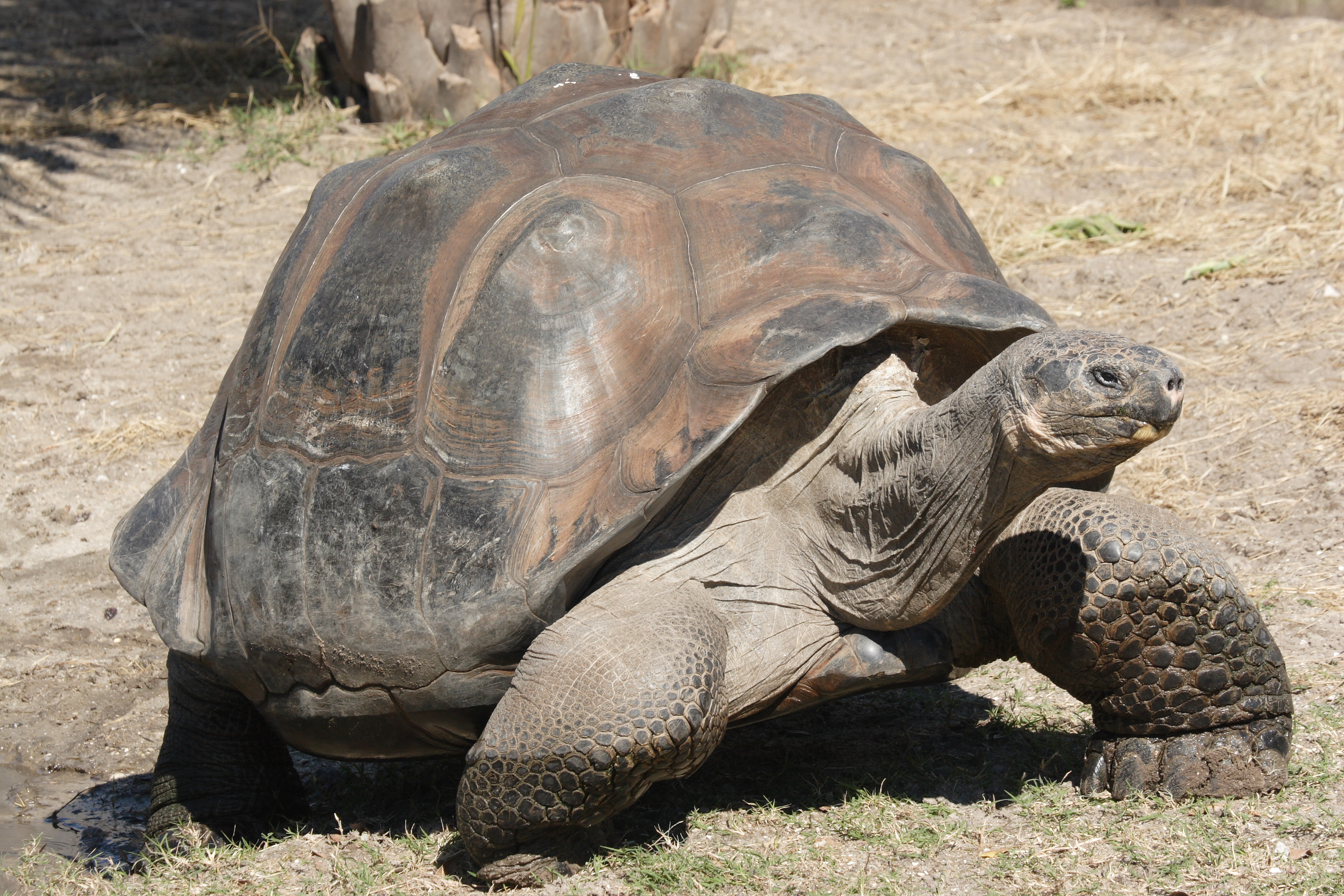
Most people would probably think it's a Galapagos Tortoise, whose lifespan is over 100 years. But you'd be wrong.

Image result for galapagos tortoise

Before we get to the winner, the runner-up is the Greenland Shark. The oldest recorded living Greenland Shark was 392 years old! They live in the Northern Atlantic Ocean and live on average of 200 years. They don't reach their adult size until 100 years old! 

Though it's the runner up of all animals, it does win the award for longest known living vertebrate animal.

Image result for greenland shark

The winner is .... the Ocean Quahog Clam!  

The animal can live over 400 years on average, and the oldest known living one was discovered at 507 years old!!! It was given the name 'Ming' because it would have been alive during the Chinese Ming Dynasty. Like the Greenland Shark, these Clams also live in the Northern Atlantic Ocean. 

This is Ming:

Ming clam shell WG061294R.jpg

But I have a feeling that once the Loch Ness Monster is caught, we'll have a new winner!

Saturday, February 10, 2018

Monarch Migration Madness!

I'm about to tell you one of the most fascinating animal facts I've heard in a long time. And it's about the Monarch Butterfly.


Every year, all Monarch Butterflies migrate south for the winter. They do this for 2 reasons: they can't survive the cold weather in the northern climates, and their larval foot plants that they eat don't grow in the winter.  So they fly south, to these locations (Mexico, S. California, and S. Florida):


Obviously butterflies aren't the only animal to fly south for the winter. So no big deal, right? Well - this is where their migration becomes unique and fascinating:

Every year, the Monarch migration to each location is 2,500 miles away. And every year the butterflies return to the same exact tree - again - 2,500 miles away. However, by the time that they reach that same tree, it is no longer the same butterfly that is doing the migration from the prior year. By the time the next year's migration occurs, the migrating butterfly is four generations younger than the last year's migrating butterfly!!!

Think about that. In one year, the Monarch goes through four generations of butterflies. And the new butterflies are migrating to the exact same tree 2,500 miles away that their great-great grandparents migrated to. Exact same tree. This is one of nature's most fascinating animal facts - and mysteries!


By the way! The Living Planet Aquarium in Salt Lake City, Utah now has an interactive butterfly exhibit! My kids loved it!